ARC LEADERSHIP SPOTLIGHT
Feature courtesy of Illumina
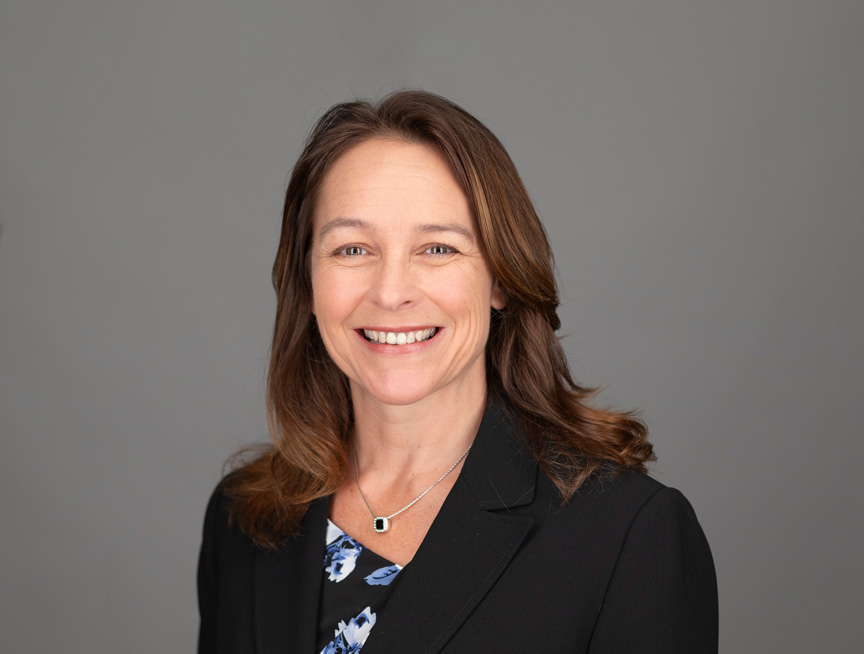
Barbara Van Hare is a member of the Alliance for Rare Cancers Board of Directors and President of pattern.org for the Rare Cancer Research Foundation | Photo courtesy of Barbara Van Hare
Multiple cancer diagnoses and a shared hereditary gene spurred Barbara Van Hare’s family to launch the Rare Cancer Research Foundation.
In the world of oncology, diagnoses often come with more questions than answers. This is especially true for rare cancers. With fewer specialists, limited resources, and inadequate treatment options, navigating a rare cancer diagnosis can feel overwhelming. That’s where Barbara Van Hare, a rare cancer patient advocate and president of Pattern.org at the Rare Cancer Research Foundation (RCRF) steps in. “There are so many moving parts with oncology care, and even more for rare cancer patients,” says Barbara. “It’s crucial for clinicians, researchers, patients, and patient advocates to work together if we want to make a meaningful impact.”
Barbara’s introduction to rare cancer and patient advocacy began with her family. In 1959, when she was just two years old, her father was diagnosed with mouth cancer. More than 60 years later, Barbara’s brother was diagnosed with glioblastoma multiforme, the deadliest form of brain cancer. He was given 18 months to live, but thanks to a revolutionary clinical trial, he is still alive today.
Several years after her brother’s diagnosis, Barbara’s nephew, Mark Laabs, was living in China when he suddenly lost vision in his right eye. He was diagnosed with uveal melanoma, a rare cancer with a 50% chance of metastasizing.
This was her third experience with cancer—and it wouldn’t be her last. Barbara herself would later be diagnosed with multiple melanomas and then with chronic lymphocytic leukemia (CLL). These five cancers appeared entirely unrelated, but under the surface they shared a common thread.
A patient-centric platform
While undergoing treatment, Barbara’s nephew, Mark, realized that although therapies for common cancers had substantially evolved, the needle had barely moved in 25 years for rare cancers. Every year, cancer touches millions of lives worldwide, and rare cancers comprise about a quarter of all cancers. Yet researchers know very little about the biological mechanisms underlying rare cancers, primarily because tissue samples are often inaccessible. To advance rare cancer research, researchers need access to both clinical data and tissue samples—and patients are often eager to provide it when they understand the potential benefits and the safeguards in place.
Recognizing his story and experience could help others, Mark decided to turn his cancer journey into something that would make a real impact for rare cancer patients. In 2014, he established the Rare Cancer Research Foundation (RCRF), a non-profit organization dedicated to building infrastructure to help cure rare cancers.
RCRF bridges the critical gap between patients and the research community by working with rare cancer patients and their care teams at hospitals across the U.S. RCRF helps patients donate their tissue samples directly to researchers who want to study their specific type of cancer.
At RCRF, Barbara leads the organization’s patient advocacy team and manages tissue and data collection for their donation platform, pattern.org. These programs are driven by patient-powered collaboration that enable patients to accelerate the pace of rare cancer research, while providing researchers with tissue samples and clinical data that will advance our understanding of rare cancers. Patients can choose to send their samples directly to the researcher or store the samples in RCRF’s Pattern Biobank for future research. Patients also have the option to donate their biological data, including genomic data and other medical records, to the Pattern Data Commons, RCRF’s open-source platform that brings together rare cancer data from across research institutions.
Together, these tools provide researchers with access to a database of biological samples, biological and genomic data, and medical history that will accelerate rare cancer research, while putting the patient first. “In order to find new therapies, researchers need to find a pattern across tissue data and medical data,” says Barbara. “But at our core, we’re a patient-centered organization. We’re giving power back to the patient. We are trying to build something where patients can drive the work, and where foundations and others can work together to support both the patients and the researchers.”
The power of knowledge
In addition to facilitating both tissue sample and medical record donations, RCRF also raises awareness of, and connects patients to genomic sequencing services. Whole-genome sequencing and whole-exome sequencing can provide critical insights into genetic changes underlying cancer, but for most rare cancer patients, sequencing lies out of reach, beyond the standard of care. RCRF advocates on behalf of rare cancer patients by educating healthcare providers about the importance of genomics.
Barbara herself never would have thought of getting genetic testing if not for her nephew Mark’s intuition to have his cancer lesions tested. Mark’s results showed a rare germline mutation in the POT1 gene. Mutations in the POT1 gene have been found to increase a person’s risk for cutaneous melanoma, chronic lymphocytic leukemia, angiosarcoma, and gliomas—three of which either Barbara, her nephew, or her brother had been diagnosed with.
Unfortunately, many physicians are still unaware of recent advances in hereditary cancer research and rare mutations such as POT1. And although studies suggest about 10% of melanomas are hereditary, most clinicians still assume that their patients’ melanoma must be due to sun exposure. In fact, when Barbara was diagnosed with her second melanoma (she has had several melanomas to date) and requested genetic testing—citing both her family history and her nephew’s POT1 mutation—her dermatologist dismissed her, told her she was overreacting, and attributed her cancer solely to sun exposure. But Barbara’s gut feeling was correct: she sought genomic sequencing elsewhere, and the results confirmed she also had the POT1 mutation. Because of this knowledge, Barbara now undergoes more frequent screenings for cancers associated with this mutation.
As scientific understanding of rare germline mutations and their connection to cancer continues to grow, patients like Barbara stand to benefit from an expanding landscape of clinical trials. “Genomic sequencing technology will fast-track insights into rare cancers,” says Barbara. “As we educate more patients and clinicians on this need, there will be significant potential to identify targeted treatments and advance personalized medicine for rare cancer patients. Every part of the oncology ecosystem needs to work together to solve these hard problems.”
Barbara Van Hare is a member of the Alliance for Rare Cancers Board of Directors. ARC is a fiscally sponsored program of the Jedi Rare Cancer Foundation. Governed by respected leaders across the rare cancer innovation system, ARC provides a venue for rare cancer stakeholders to co-create and implement large-scale collaborative partnerships across multiple rare tumor types to accelerate cures for all rare cancers.
Your generous donation has the power to save lives.
Together, we will END rare cancer.
Comment, Like, Share & Follow Us on Social Media.
Together, we can take action against rare cancer and help save lives.

The Jed Ian Taxel Foundation for Rare Cancer Research | P.O. Box 84, Dobbs Ferry, NY 10522
The Jed Ian Taxel Foundation for Rare Cancer Research, Inc. is a 501 (C)(3) Non-Profit Organization, accepting Tax Deductible donations from individuals, corporations, family-advised funds and foundations. Federal Tax ID 86-2610819
DISCLAIMER: THIS WEBSITE DOES NOT PROVIDE MEDICAL ADVICE The information, including but not limited to, text, graphics, images and other material contained on this website are for informational purposes only. No material on this site is intended to be a substitute for professional medical advice, diagnosis or treatment. Always seek the advice of your physician or other qualified health care provider with any questions you may have regarding a medical condition or treatment and before undertaking a new health care regimen, and never disregard professional medical advice or delay in seeking it because of something you have read on this website.